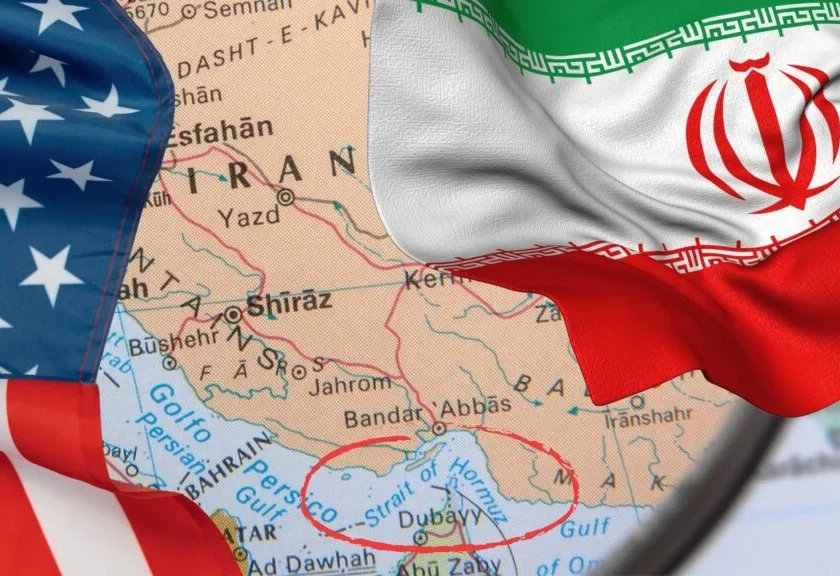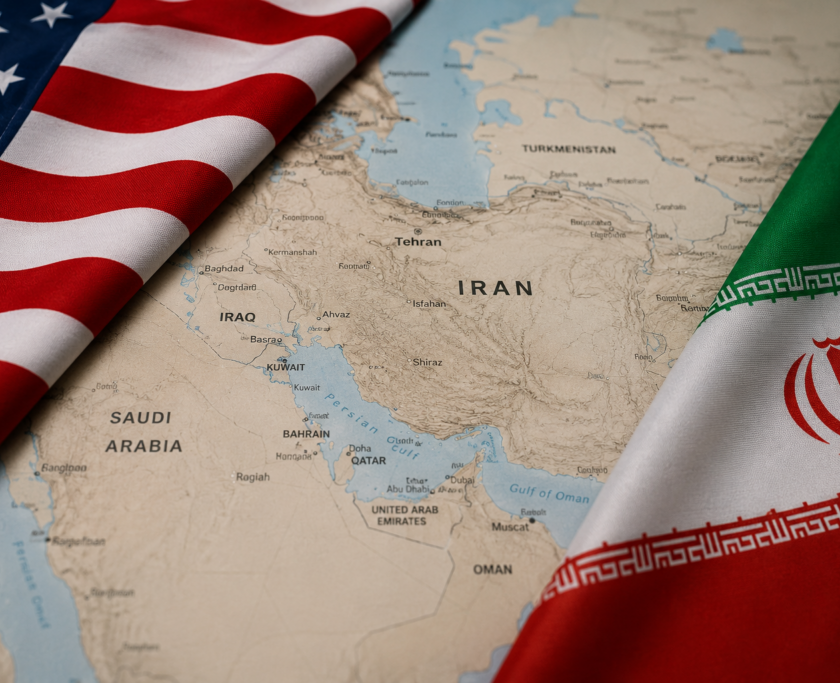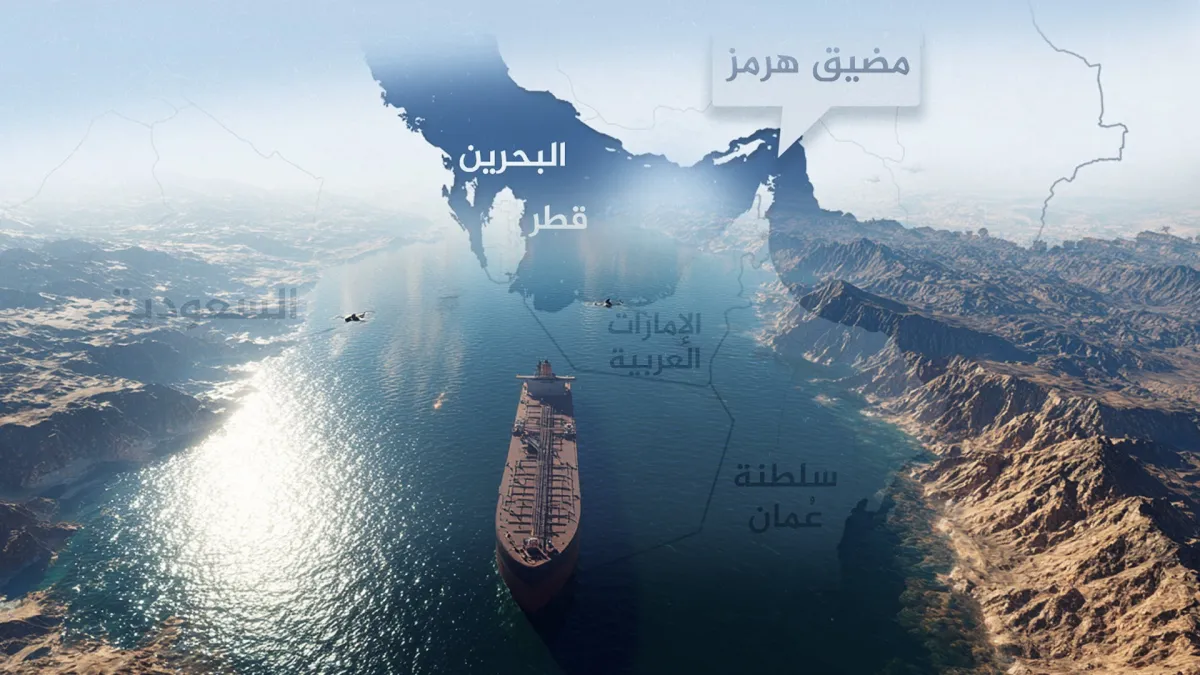
Iran is not simply “closing Hormuz” — it is turning the strait into the centrepiece of the negotiations
By: News Desk | 26 August 2026
The latest Iranian warning over the Strait of Hormuz deserves closer scrutiny because the headline — “Iran will keep Hormuz closed until America accepts its conditions” — only tells part of the story.
The more important development is what sits underneath it.
Tehran is attempting to link navigation through one of the world’s most important maritime chokepoints to the implementation of a broader US-Iran understanding, including sanctions, military operations, frozen Iranian assets and the future security architecture of the region.
Iranian officials have repeatedly said that Hormuz will not fully reopen until Washington meets its commitments. On August 18, Parliament Speaker Mohammad Bagher Qalibaf explicitly linked reopening to lifting the US blockade, releasing frozen Iranian assets, lifting oil sanctions and ending military operations and threats.
But there is an important development that complicates the picture.
Iran and Oman have been negotiating a temporary navigation corridor.
On August 25, Oman said it was hopeful that a temporary corridor could soon be announced, while Iran and Oman discussed a phased framework and mine-clearing arrangements.
And on August 26, Iran’s Revolutionary Guards said Tehran and Muscat had reached agreements concerning their respective shares of the strait and its revenues.
So the situation is not simply:
Iran closes Hormuz → America gives in → Hormuz reopens.
It is considerably more complicated.
What we are watching is a negotiation over who controls, manages, secures and benefits from the world’s most strategically important energy chokepoint.
What exactly is Iran demanding?
Iran’s demands have evolved and been expressed through several officials, so they should not be treated as one single, perfectly fixed list.
But the central demands reported by Iranian officials include:
- an end to the US naval blockade;
- lifting or easing oil sanctions;
- release of frozen Iranian assets;
- an end to US military operations and threats;
- implementation of commitments contained in the June memorandum;
- arrangements governing commercial shipping;
- and, in statements from senior security officials, broader regional ceasefire requirements involving conflicts in Gaza and Lebanon.
Mohsen Rezaei, Iran’s senior security official, went further in August, saying that Hormuz would remain closed unless Washington changed its behaviour and accepted Tehran’s conditions. His demands also included ending the US naval blockade and a wider regional ceasefire.
That is why describing the dispute merely as an oil-sanctions disagreement misses the bigger picture.
Iran is attempting to negotiate simultaneously over:
economics + military activity + maritime security + regional wars + sovereignty.
The June Memorandum is the missing piece of the puzzle
To understand today’s crisis, one has to go back to the US-Iran memorandum signed in June.
The agreement created a 60-day framework intended to end hostilities and establish a pathway toward negotiations over Iran’s nuclear programme and the wider conflict.
One of its most consequential provisions concerned Hormuz.
According to the text cited by CBS, Iran agreed to make its best efforts to facilitate safe passage of commercial vessels for 60 days, while the parties were supposed to discuss longer-term arrangements for administration and maritime services in the strait.
But the 60-day period expired.
And the agreement subsequently unravelled.
Iran says the United States failed to honour its side of the bargain, including the continued naval blockade.
Washington, meanwhile, has rejected Tehran’s interpretation and insists on maintaining pressure.
That disagreement is now sitting directly on top of Hormuz.
The real dispute: Who controls the Strait?
This may ultimately be more important than the sanctions themselves.
Iran’s position is that the coastal states have sovereign rights over the strait and that its future management must respect those rights.
The United States, by contrast, insists on freedom of navigation and has rejected any Iranian attempt to exercise unilateral control over international shipping.
This creates a fundamental clash.
Tehran’s argument:
Iran cannot be expected to facilitate unrestricted shipping while being blockaded, sanctioned and threatened militarily.
Washington’s argument:
Iran cannot use a vital international waterway as a bargaining instrument or restrict commercial navigation.
Both positions have political logic.
And that is precisely why the negotiations are so difficult.
But is Hormuz actually “closed”?
This needs careful wording.
The strait has not simply disappeared from the global shipping map.
Rather, commercial traffic has been severely disrupted, reduced and subjected to competing restrictions, attacks and threats.
Reuters reported that traffic through Hormuz had fallen to extremely low levels after further attacks on ships, while maritime authorities continued reporting security incidents.
Iran has also threatened vessels that violate its transit rules. Reuters reported on August 24 that Iran had blacklisted 45 tankers and threatened fines or confiscation over alleged violations.
So “closed” is politically accurate as Tehran’s description of its policy, but operationally the situation is more nuanced.
There is still movement.
There are negotiations over corridors.
And there is now an effort to establish controlled navigation.
Oman is quietly becoming one of the most important players
The role of Oman could prove decisive.
Muscat has historically maintained channels with both Tehran and Washington.
That makes it one of the few governments capable of talking to both sides without immediately being dismissed as an enemy.
On August 25, Oman’s foreign minister said discussions with Iran had been constructive and expressed hope for a temporary corridor through Hormuz.
Iran and Oman have also discussed clearing mines and creating practical navigation arrangements.
This matters enormously.
Because a temporary corridor could provide both sides with a face-saving option.
Iran could say:
We have not surrendered control.
The United States could say:
Commercial navigation has been restored.
That is the kind of ambiguity often required to end a military standoff.
Qatar is now entering the diplomatic picture
Another significant development came on August 27.
Qatar’s Prime Minister Mohammed bin Abdulrahman Al Thani is travelling to Tehran in an attempt to revive diplomacy between Washington and Tehran.
Qatar has relationships with Washington, Iran and other Gulf states.
That gives Doha another potentially useful diplomatic channel.
The emergence of Oman + Qatar + Pakistan as intermediaries is particularly interesting.
Rather than one mediator trying to solve everything, several regional states appear to be creating overlapping channels.
That could be a sign that formal US-Iran negotiations are not completely dead.
Pakistan’s role is also growing
Pakistan has quietly become another important diplomatic bridge.
Islamabad has maintained relations with both Washington and Tehran and has been attempting to facilitate communication.
Recent Pakistani efforts followed visits to Tehran by senior Pakistani officials, with Iranian positions reportedly being conveyed through the Pakistani channel.
For Pakistan, there is an obvious strategic interest.
A prolonged US-Iran war could destabilise the wider region, increase energy costs and create pressure along Pakistan’s western frontier.
But there is another dimension.
Pakistan wants to establish itself as a regional diplomatic power rather than merely a security partner of larger states.
The Hormuz crisis gives Islamabad an opportunity to do exactly that.
Why Iran is willing to take the economic risk
At first glance, Iran’s position appears self-defeating.
Iran needs oil revenue.
Iran needs trade.
Iran needs access to international markets.
So why restrict a waterway that is essential to its own economy?
Because Tehran appears to believe that the cost is not borne by Iran alone.
Hormuz affects:
- Saudi Arabia;
- UAE;
- Qatar;
- Iraq;
- Kuwait;
- Bahrain;
- India;
- China;
- Japan;
- South Korea;
- Europe;
- and the global oil market.
The strait therefore gives Iran something it does not possess in most other areas of the conflict:
the ability to impose costs on much more powerful economies.
This is asymmetric warfare without necessarily firing a missile
That is the strategic genius — and danger — of Hormuz.
Iran does not need to defeat the US Navy.
It only needs to make commercial operators believe that sailing through the strait is too risky.
If:
- insurers raise premiums,
- tanker companies suspend voyages,
- crews refuse assignments,
- ports slow operations,
- and governments begin stockpiling energy,
the economic consequences become enormous.
That is why shipping disruption can sometimes be more powerful than a conventional military strike.
But Iran also has a major vulnerability
Tehran cannot push this strategy indefinitely without paying a price.
Iran itself needs:
- exports;
- imports;
- regional trade;
- oil revenue;
- access to Asian markets.
A prolonged Hormuz crisis could therefore damage Iran’s own economic recovery.
And Iran risks alienating countries that currently have strong incentives to remain neutral.
China is particularly important.
Beijing wants Iranian energy.
But it also wants predictable global shipping.
India faces the same problem.
So does Japan.
So does South Korea.
Iran’s leverage is therefore powerful — but it is not unlimited.
The US has its own problem
Washington can attempt to force open the strait militarily.
But that would be enormously risky.
The United States has already warned that it will destroy Iranian vessels attempting to lay mines. President Trump said the US had a zero-tolerance policy on mine placement.
A direct American effort to reopen Hormuz could therefore produce exactly the escalation Washington is trying to avoid.
Imagine the sequence:
US attempts to clear shipping lanes
→ Iranian forces resist
→ American and Iranian forces exchange fire
→ tankers flee
→ insurance costs explode
→ Gulf energy infrastructure comes under threat
→ oil prices surge.
That is why diplomacy remains preferable to a naval showdown.
The oil market is already watching the diplomacy
There is a fascinating contradiction in current market behaviour.
Despite the severity of the confrontation, oil prices have recently fallen as investors became more optimistic about a possible Hormuz arrangement.
Reuters reported that oil prices settled lower as markets watched the Iran-Oman negotiations.
On August 27, Indian market reporting also pointed to renewed hopes of a reopening as one factor behind another decline in crude prices.
That tells us something important.
Markets are not necessarily betting on peace.
They are betting on traffic returning.
Even a temporary corridor could reduce the immediate risk premium.
The biggest misconception: “20% of global oil goes through Hormuz”
This figure is widely quoted, but it needs context.
The Strait historically carries roughly one-fifth of global petroleum liquids consumption, and an even larger share of LNG trade by volume passes through the waterway.
But not all of that supply necessarily disappears if Hormuz is disrupted.
Some Gulf producers have alternative pipelines.
Saudi Arabia and the UAE, for example, have infrastructure capable of moving some crude without using the strait.
The problem is capacity.
There is no alternative large enough to fully replace Hormuz.
That is why even partial disruption matters.
Why China is watching extremely closely
China is arguably one of the most important external actors in this crisis.
It has substantial energy interests in the Gulf and maintains close economic relations with Iran.
At the same time, Beijing does not want a prolonged energy shock.
A prolonged closure would affect:
- Chinese refiners;
- shipping companies;
- manufacturing;
- inflation;
- energy security.
China therefore has incentives to encourage Tehran to negotiate.
But Beijing also has little interest in allowing Washington to dictate the entire security architecture of the Gulf.
That creates an interesting diplomatic balance.
China may support reopening Hormuz without supporting American strategic dominance over the region.
India has an even more immediate reason to worry
For India, this is not an abstract geopolitical dispute.
The Gulf is central to India’s energy security.
India also has millions of citizens working across Gulf countries and major trade relationships with the region.
Any prolonged Hormuz crisis could affect:
- crude oil prices;
- LPG supplies;
- shipping costs;
- fertiliser prices;
- aviation fuel;
- inflation;
- the rupee;
- and India’s trade balance.
There is another vulnerability.
India’s geographical location means that disruption in Hormuz can quickly translate into higher transport and insurance costs across the Arabian Sea.
For New Delhi, therefore, a diplomatic reopening is far more desirable than a military victory by either side.
The sanctions question is where the negotiations become hardest
Washington’s latest sanctions campaign makes a compromise more difficult.
On August 24, the Trump administration expanded sanctions against Iran and warned countries doing business with Tehran that they could face consequences. Reuters described the move as an attempt to cut off Iran’s economic lifeline, although Washington has so far held back some of the most disruptive secondary-sanctions measures.
Iran sees that as proof that the US is violating the spirit of the June understanding.
Washington sees sanctions as leverage.
This is the classic problem with coercive diplomacy:
The pressure designed to bring the other side to the negotiating table can simultaneously make trust almost impossible.
So, will Iran really keep Hormuz closed until America accepts “everything”?
That is the biggest question.
Probably not in the literal sense implied by the headline.
There is a difference between:
full reopening
and
controlled navigation.
Iran may maintain the political position that Hormuz remains closed while simultaneously allowing:
- selected commercial vessels;
- humanitarian shipments;
- vessels using agreed routes;
- escorted tankers;
- or traffic through a temporary corridor.
That would allow Tehran to preserve its negotiating leverage.
And the Oman talks appear to be moving precisely in that direction.
The emerging compromise may look very different from a traditional peace deal
The most realistic short-term outcome may be something like:
Phase 1 — Temporary corridor
Iran permits controlled commercial navigation.
Phase 2 — Mine clearance and security arrangements
Iran and Oman establish technical mechanisms.
Phase 3 — US eases selected pressure
Washington could offer limited sanctions relief or exemptions.
Phase 4 — Broader negotiations
The nuclear programme, sanctions, military operations and regional conflicts return to the negotiating table.
Phase 5 — Permanent Hormuz framework
The parties negotiate a longer-term maritime regime.
That is considerably more realistic than expecting Tehran and Washington to suddenly agree on every issue.
There is also a major legal question
Hormuz is not simply an Iranian waterway.
It lies between Iran and Oman, with territorial waters and international navigation rights governed by complex maritime law.
That is why the question of transit rights, innocent passage, coastal-state sovereignty and international navigation is so politically sensitive.
Iran’s insistence on coastal-state rights and America’s insistence on freedom of navigation are not merely rhetorical positions.
They touch a much wider question:
Who has the authority to regulate strategic maritime chokepoints during wartime?
The answer could influence future disputes far beyond the Persian Gulf.
What happens if negotiations fail?
There are four increasingly dangerous possibilities.
1. Prolonged partial closure
This is the most likely near-term danger.
Traffic continues at reduced levels.
Oil remains available, but transportation becomes expensive and unpredictable.
2. Shipping confrontation
Iran detains or threatens vessels.
The US responds.
Commercial shipping becomes even more reluctant to enter the strait.
3. Mining or military escalation
Any major mine-laying incident could trigger direct US-Iran military action.
Trump has already warned that Iranian vessels laying mines would be destroyed.
4. Full regional escalation
Iranian attacks on US or Gulf assets trigger American strikes.
Gulf energy infrastructure becomes a target.
Hormuz effectively becomes a war zone.
That is the scenario everyone wants to prevent.
The most encouraging sign is that diplomacy has not completely collapsed
Despite the rhetoric, several channels remain active.
Oman is negotiating with Iran.
Pakistan is carrying messages.
Qatar is preparing a Tehran visit.
Iran and Oman are discussing a temporary corridor.
Markets are reacting positively to signs of progress.
These are not the signs of a diplomatic process that has completely died.
They are signs of a crisis in which the parties are still searching for an off-ramp.
But the most dangerous sign is the widening economic war
At the same time, Washington is escalating sanctions.
Iran is threatening retaliation.
Iran has warned vessels over transit rules.
The United States has threatened military action against Iranian ships involved in mining.
And both sides continue to disagree over the interpretation of the June memorandum.
This creates a classic security dilemma.
Each side says it is responding defensively to the other.
But every defensive measure is interpreted by the opponent as preparation for aggression.
Final Analysis: Hormuz Is Now the Negotiating Table
The most important development is not simply that Iran says the Strait of Hormuz is closed.
It is that Tehran has successfully turned access to Hormuz into a bargaining chip in negotiations over the entire US-Iran conflict.
Washington wants:
freedom of navigation + pressure on Iran + military leverage.
Iran wants:
sanctions relief + an end to the blockade + an end to military pressure + recognition of its role in determining the security of the strait.
Oman wants:
a workable navigation arrangement without becoming trapped in the conflict.
Qatar and Pakistan are attempting to reopen diplomatic channels.
China wants:
energy security without surrendering strategic influence.
India wants:
stable Gulf shipping and predictable energy prices.
And the Gulf states want something even simpler:
they do not want their oil infrastructure and cities to become the next battlefield.
That is why the next few days matter.
The fact that Iran and Oman are discussing a temporary corridor is potentially more significant than the latest exchange of threats.
If that corridor becomes operational, it could provide the first practical step toward de-escalation.
If negotiations collapse, however, the confrontation could move rapidly from economic coercion to maritime confrontation.
The central question is therefore no longer simply whether Iran will reopen Hormuz.
It is:
Can Tehran and Washington find a formula that allows Iran to claim it has protected its sovereignty while allowing the United States to claim that freedom of navigation has been restored?
That is the diplomatic puzzle.
And Oman may currently hold the most important piece of it.
The Strait of Hormuz is no longer merely a shipping route in this conflict. It has become the bargaining table itself.